By submitting, you consent to our use of your data. Privacy Policy.
Category
Professional Services
Built by
Beam.ai
Microsoft Teams is a communication platform used by distributed teams to manage chats, channels, messages, meetings, and files. Beam agents can read those records, apply an approved rule, create or update the next record, and route exceptions for review. Start with an event such as a team event or request needs an update, then confirm account permissions and connector availability before moving it into production

What the Microsoft Teams integration does
Microsoft Teams is a communication platform used by distributed teams to manage chats, channels, messages, meetings, and files. In Beam, it becomes a controlled action point: agents can retrieve the context they need, make an approved update, and hand unusual cases to a person. The exact objects and permissions depend on the connector configuration, so use the capability evidence in the migration record when defining a workflow.
How Beam agents use Microsoft Teams
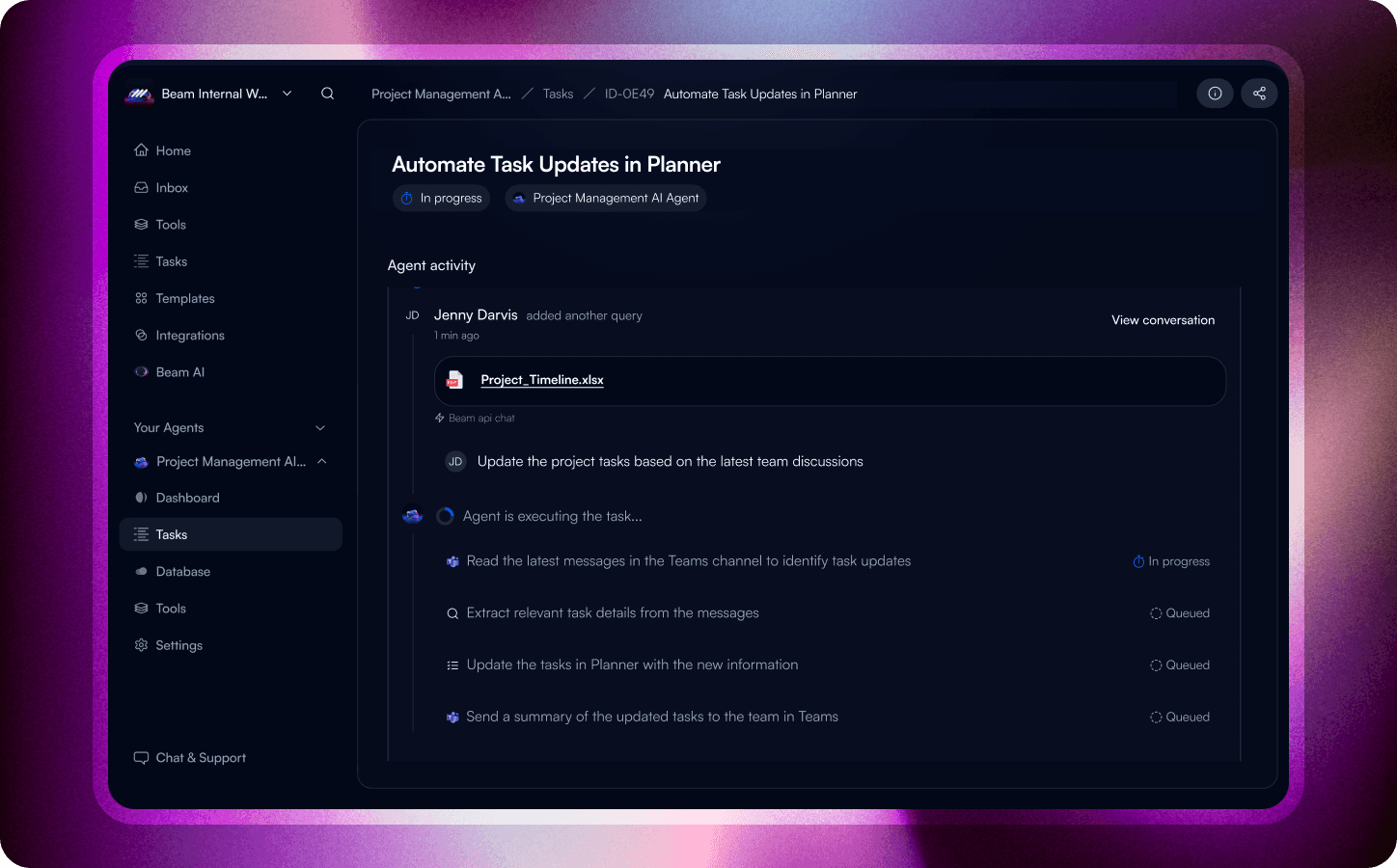
A workflow starts with an event such as a team event or request needs an update. The agent checks chats, channels, messages, meetings, and files in Microsoft Teams, applies the workflow rule, performs the permitted update, and records the result. If the data is incomplete or the requested action falls outside the connector's permissions, the agent routes the case for review instead of guessing.
Example workflows
When a team event or request needs an update, a Beam agent reads chats, channels, messages, meetings, and files in Microsoft Teams, updates the next record, and routes exceptions to the responsible owner.
When a workflow request arrives, a Beam agent retrieves chats, channels, messages, meetings, and files from Microsoft Teams, applies the agreed rule, and records the outcome for distributed teams.
After a status, approval, or delivery event changes, a Beam agent checks chats, channels, messages, meetings, and files in Microsoft Teams, sends the next notification, and leaves an auditable handoff.
Operational value
Fewer manual handoffs between Microsoft Teams and the systems around it.
A clearer audit trail for chats, channels, messages, meetings, and files and exception handling.
More consistent movement from a team event or request needs an update to the next owner or system.
Before you build
Confirm the supported chats, channels, messages, meetings, and files, authentication scopes, and availability for your Beam workspace. Keep exception handling explicit: the agent should pause and route a case when required data or permissions are missing.